2D and 3D Shapes Worksheet Activities for Creative Learning
Welcome, parents, teachers, and curious young minds, to our Shapes Galore: Engaging 2D and 3D Shapes Worksheet Activities, tailor-made for 1st-grade students. This resource is thoughtfully crafted to introduce the essential concepts of geometry in a fun and interactive way. Whether your goal is to reinforce classroom learning or support early childhood development at home, these activities provide a structured yet playful approach to shape recognition and application.
Why Shape Recognition Matters in Early Education
Understanding 2D and 3D shapes isn’t just about memorizing names like “circle” or “cube.” It builds spatial reasoning, enhances fine motor skills, and lays the groundwork for more advanced math and science concepts. For educators and designers working with educational content, integrating shape-based activities into creative resources helps maintain student interest while promoting cognitive growth.
Included Activities for Dynamic Learning
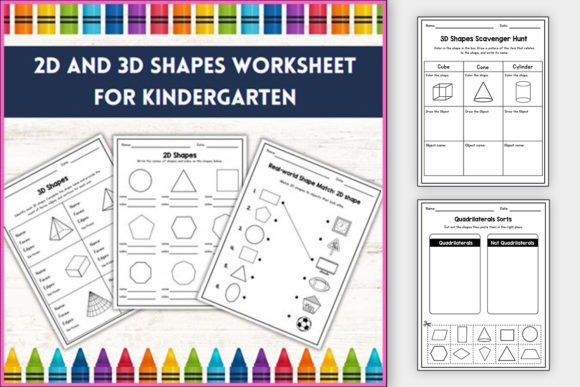
The worksheet collection includes a variety of engaging exercises such as:
- Identifying Shapes – 2D and 3D Shape Shorts
- 2D Shapes Scavenger Hunt
- 3D Shapes Scavenger Hunt
- Real-world Shape Match (2D and 3D)
- Quadrilaterals Sorts
- Shape Graphing and Pattern Activities
- Cut-and-Paste Exercises
Each activity encourages hands-on interaction, visual discrimination, and real-world connections—key components of effective learning design.
Branding and Visual Design for Educational Resources
When developing educational materials like 2D and 3D Shapes Worksheet Activities, maintaining a consistent brand identity is crucial. A well-defined color palette and clear typography help reinforce trust and familiarity among users. Consider using bold, contrasting colors to highlight different shapes and ensure that fonts are clean and easy to read, especially when targeting younger audiences.
Visual hierarchy plays a big role here too. By organizing information through size, spacing, and alignment, you can guide learners from one task to the next without confusion. A professional layout also improves usability, making it easier for teachers to navigate and for students to focus on the core activities.
Marketing Materials and Social Media Graphics
Educational products often rely on compelling marketing visuals to stand out in a competitive market. The same principles used in 2D and 3D Shapes Worksheet Activities can be adapted into promotional designs. Use geometric elements creatively in social media graphics to showcase what’s inside the worksheets. A strong visual theme across all assets—from website banners to email headers—supports brand consistency and makes your offering more memorable.
For digital marketers, leveraging shape-based imagery can simplify complex ideas and make them more relatable. Think about how a cube or triangle can represent structure, stability, or innovation depending on the context. These subtle cues enhance storytelling and connect with the audience on an emotional level.
Website and UI/UX Design Applications
Incorporate shape themes into your website’s design to create a cohesive user experience. In UI design, using simple 2D and 3D shapes can help categorize sections or highlight features. Buttons styled as circles or rectangles offer intuitive navigation, while 3D-like icons can add depth and modern aesthetics to digital interfaces.
From a UX perspective, these activities can serve as downloadable assets within an educational platform. Organizing them by grade level or subject ensures clarity and ease of use. Thoughtful placement of download buttons and instructional text can significantly improve conversion rates and user satisfaction.
Editorial Layouts and Packaging Design
Designers working on magazines, newsletters, or printed guides can use shape motifs to break up text and add visual interest. In editorial design, a clever use of 2D and 3D Shapes Worksheet Activities can illustrate lessons or act as chapter dividers. Similarly, in packaging design, incorporating recognizable geometric forms can attract attention and communicate the product's purpose clearly—even before a word is read.
When creating merchandise or print-ready materials, always consider scalability. High-quality PDF and JPG formats allow for crisp printing whether you're producing flashcards, posters, or workbooks. Ensuring no bleed settings are applied keeps the final output clean and precise.
Design Tips for Effective Creative Projects
To maximize the impact of 2D and 3D Shapes Worksheet Activities, keep these best practices in mind:
- Maintain Consistency: Stick to a unified style across all pages to build a strong visual identity.
- Optimize Readability: Choose fonts that are legible for children and avoid overly decorative styles.
- Use Color Strategically: Assign specific colors to different shape categories to aid memory and engagement.
- Focus on Usability: Ensure activities are age-appropriate and instructions are clear and concise.
- Test Across Devices: If sharing digitally, confirm that the worksheets render correctly on both mobile and desktop screens.
These tips not only elevate the quality of the worksheets but also align with current design trends that emphasize clarity, simplicity, and user-centered approaches.
By embedding thoughtful design choices into 2D and 3D Shapes Worksheet Activities, you’re not just teaching shapes—you're nurturing a love for learning and creativity. Whether you're designing for education, branding, or digital experiences, the right combination of form, function, and flair will always deliver a powerful message. Let these worksheets inspire your next project and remind you of the value of starting small with big ideas.